

Ever stood in a hardware store and frozen at one simple question?
Is your door a left swing or a right swing?
You’re not alone.
Plenty of people guess, order the wrong door, and pay for it later.
Here’s the short answer.
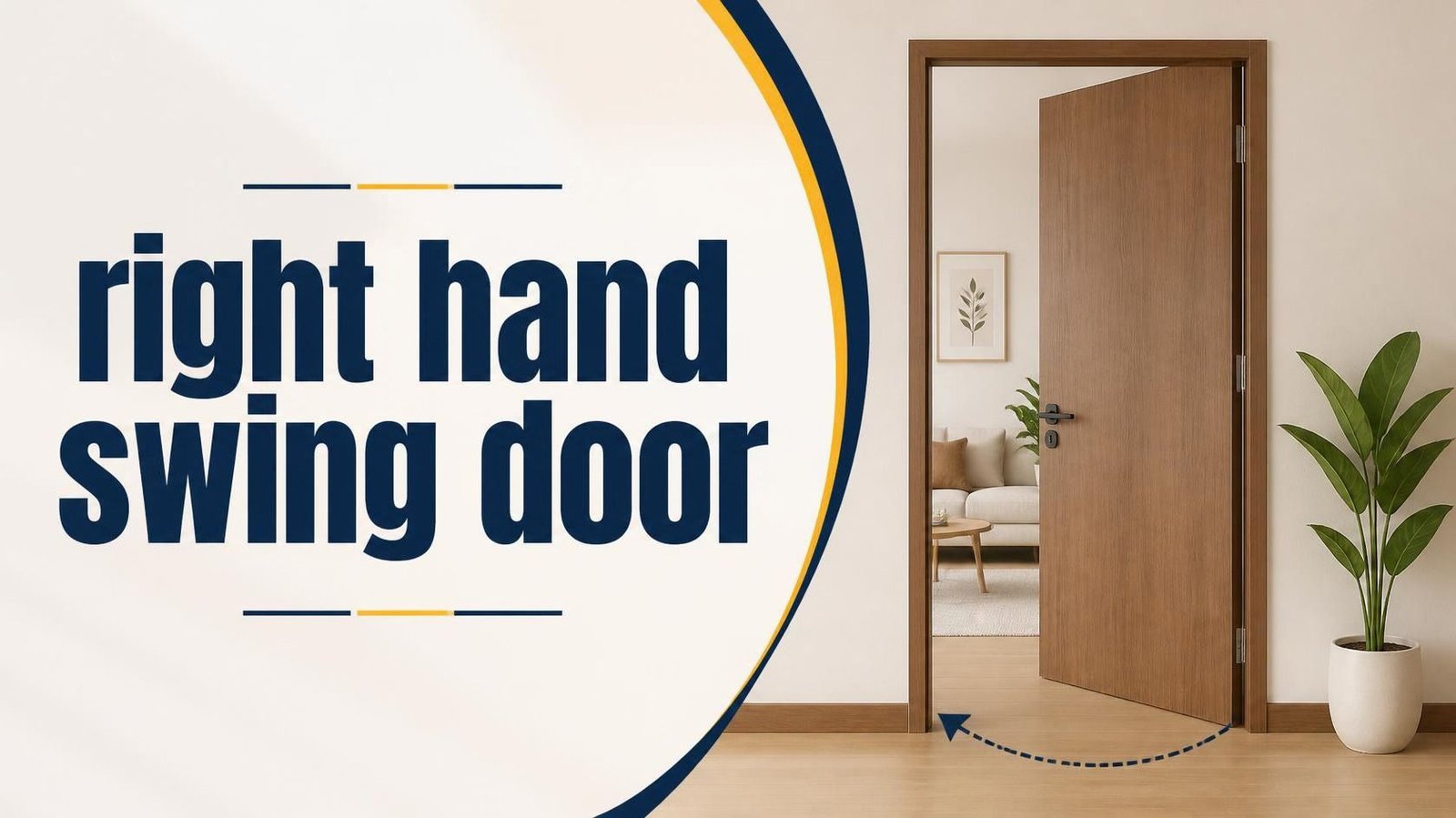
A left swing door has its hinges on left when you stand facing the door from the push side.
A right swing door has its hinges on right from that same spot.
This guide shows you how to check it in under a minute.
You’ll also learn why people mix it up and how to avoid the mistake.
Quick Answer
Stand where the door opens away from you.
Look at the hinges.
If they sit on your left, you’ve got a left hand door.
If they sit on your right, it’s a right hand door.
That’s the whole rule for most inswing doors.
The door hinge position decides the handing, not the handle.
Some brands and regions flip the terms.
So always confirm with your supplier before you buy.
Meaning of Left or Right Swing Door
A left or right swing tells you which side the door hinges sit on.
It also tells you which way the door movement goes when you open it.
Builders call this door handing, or simply the door hand.
Think of it as the door’s personal profile.
Two doors can look identical but swing in opposite ways.
That small detail changes how a room works every day.
Key Ideas
Three ideas carry the whole topic.
First, door swing direction starts with the hinge side.
Second, the door opening direction is either toward you or away from you.
Third, your viewing spot matters.
Change where you stand and the answer flips.
That’s why people argue about it for ten minutes.
Examples
Picture a bedroom door in a hallway.
You push it open and the hinges sit on your right.
That’s a right hand swing door.
Now picture the same door from inside the bedroom.
You’d pull it toward you and the hinges would appear on your left.
Same door, different view, so pick one spot and stay consistent.
Why People Misspell or Misunderstand “Left or Right Swing Door”
Most people don’t misspell the words.
They misread the idea.
“Left” sounds like the side of the handle, and that’s where trouble starts.
Others mix up left hand and right hand door with the side they walk through.
That’s a natural slip.
Nobody teaches this in school.
Common Issues
These mistakes show up again and again:
- Reading the handle side instead of the hinge placement
- Confusing left and right because they viewed the door from inside
- Mixing up inward and outward swing
- Using a supplier’s chart without checking its viewing rule
- Guessing door swing from memory of an old house
Each one can lead to a wrong door handing.
And a wrong order is hard to undo.
Tip
Take a photo of your door from the push side.
Mark the hinge side on the picture with a quick arrow.
Send that photo to your supplier alongside your order.
It takes thirty seconds.
It can save you a restocking fee and a week of waiting.
Origin of Keyword
These four words are old and plain.
Each one carries a bit of history, which helps explain why the idea feels slippery.
Let’s look at them one by one.
Left
“Left” traces back to an Old English word linked with weak or idle.
Most people were right handed, so the left side got a bad name.
The word stuck anyway.
In doors, it simply names a side.
There’s no judgment attached.
A left hand swing door isn’t better or worse than its twin.
Right
“Right” comes from an Old English word meaning straight or correct.
That’s why it also means proper, as in “the right answer.”
Language favored the right side for a long time.
For a right swing door, the meaning is purely about position.
The hinges sit on your right as you face the door.
Nothing more to it.
Swing
“Swing” grew from an old word that meant to beat or whip.
Over time it came to mean a smooth back and forth motion.
That’s exactly what a hinged door does.
A door doesn’t slide or fold here.
It rotates around its door hinges.
So the swing door label describes real door movement.
Door
“Door” comes from an ancient Germanic root tied to the idea of a gate or opening.
It’s one of the oldest practical words in English.
People have used it for thousands of years.
Today it covers everything from a closet slab to a front entrance.
The handing rule works for nearly all of them.
That’s good news for your home improvement list.
How to Identify Door Swing Direction
You don’t need tools.
You just need your eyes and a clear spot to stand.
Here’s a simple routine.
First, decide which side is the push side.
That’s the side where the door moves away from you as it opens.
Second, check hinge position from that spot.
Hinges on the left mean left hand.
Hinges on the right mean right hand.
That’s how you determine door swing in about ten seconds.
For doors that swing outward, like many exterior doors, stand outside.
The door opens toward you.
Many suppliers call these “reverse” doors, so read their notes closely.
Quick Guide
Use this table when you’re unsure.
| What you see | Where you stand | Your door is |
| Hinges on left, door opens away | Push side | Left hand inswing |
| Hinges on right, door opens away | Push side | Right hand inswing |
| Hinges on left, door opens toward you | Outside | Left hand outswing |
| Hinges on right, door opens toward you | Outside | Right hand outswing |
Keep this handy on your phone.
It’ll help you identify door swing direction at a glance.
Just remember that some brands use their own wording.
Common Mistakes to Avoid
The biggest trap is looking from the wrong side.
Stand inside the room and you’ll read the opposite hand.
That’s a classic wrong side of door error.
Another trap is trusting your memory.
People say “it’s a right swing” because that’s how their last home felt.
Always check the door itself.
Here are a few more door swing mistakes:
- Skipping the door frame and measuring only the slab
- Ignoring the hinge installation points on the jamb
- Assuming every supplier uses the same terms
- Forgetting clearance for furniture or a stair landing
Each one is easy to dodge.
You just need a minute of patience.
That minute beats a return shipment.
Correct Approach
Start with a sketch of your room.
Mark the wall, the door frame, and nearby furniture placement.
Then pick the swing that keeps the path clear.
Stand in the right spot, check the hinges, and write the handing down.
Add inward or outward next to it.
That one line is your order note.
Inswing or Outswing: Which Is Better?
An inward swing keeps the door inside the room.
It protects the walkway outside and feels natural in a bedroom.
It also gives you more privacy in a bathroom.
An outward swing saves floor space inside.
It also helps in small rooms and can improve safety in places where people need a fast exit.
Local building rules sometimes decide this for you, so check them first.
So which swing door is better?
It depends on the room, the people, and the room layout.
There’s no single winner.
Does Door Swing Direction Matter?
Yes, and more than most people expect.
A good swing improves comfort, ease of use, and accessibility.
A bad one makes you dance around a bed or a vanity.
Picture a bathroom door that opens into the sink.
Every morning you bump your hip.
That’s a design problem, not a personal one.
Swing also affects space use.
A door that clashes with a wardrobe wastes a whole corner.
Small fixes here pay off during daily use.
Can You Change Door Swing Direction?
Often you can.
You may need to move the door hinges, shift the strike plate, and adjust the handle.
Some prehung doors are easy to flip.
Slab doors may need new drilled holes.
That takes more care and sometimes a pro.
Plan for extra filler and paint on the old spots.
A door replacement might be the smarter move in some cases.
Check the jamb condition first.
Then compare the costs of fixing versus ordering new.
Room by Room: Where Swing Direction Counts Most
A bedroom door usually opens against the nearest wall.
That keeps the bed out of sight when someone peeks in.
It also leaves room for a dresser on the other side.
A kitchen door needs more care.
You don’t want it hitting the fridge or blocking a counter.
Think about where you carry hot pans and trays.
A bathroom door should swing so that the toilet isn’t the first thing a guest sees.
That’s a small detail with a big effect.
It also adds a touch of interior design polish.
Ordering a Door Online Without Regret
Online door ordering feels easy until the box arrives backward.
Many sellers use different charts and terms.
Read their handing guide before you click.
Send them your photo and hinge note when you can.
Ask what viewing side they use.
It’s a quick question that protects your wallet.
Custom sizes are often final sale.
That means a wrong choice can mean material waste and a lost deposit.
Good planning supports durable materials staying in use instead of in a skip.
Everyday Examples
Let’s make it real.
You’re in a narrow hallway with a laundry closet on the left.
A right swing keeps the door from blocking the washer.
Now think about a small home office.
A left hand door might clear your desk and your chair.
One small shift in the hinge side makes the room feel bigger.
Or take a front entrance with a long porch rail.
An outward swing might hit the rail.
An inward swing keeps the exit smooth and the porch clear.
Final Thoughts
A left or right swing door boils down to one simple look.
Face the door from the push side and check the hinges.
Left means left hand, right means right hand.
Take a minute, take a photo, and confirm the supplier’s rule.
That small habit saves money and stress.
It also helps your next door installation go smoothly.
Got a door story that went wrong, or a trick that worked?
Drop it in the comments and tell us what you learned.
And if this guide helped, share it with someone who’s about to order a door.
